Pellet Grill vs Gas Grill: Which One Fits Your Cooking?
Pellet grill vs gas grill: wood smoke and set-and-forget heat against fast, hot searing. Temperatures, fuel, power, upkeep and safety side by side.

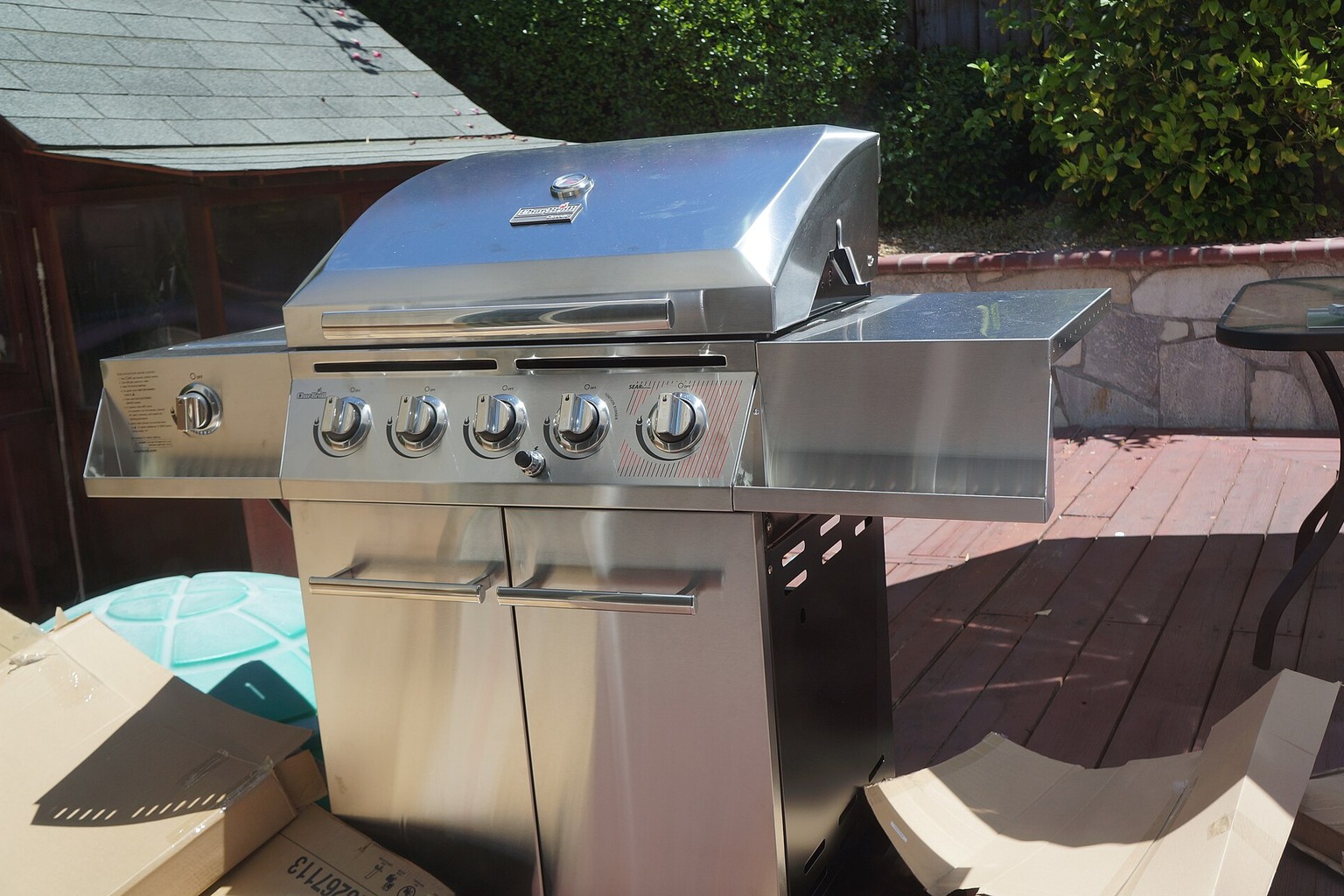
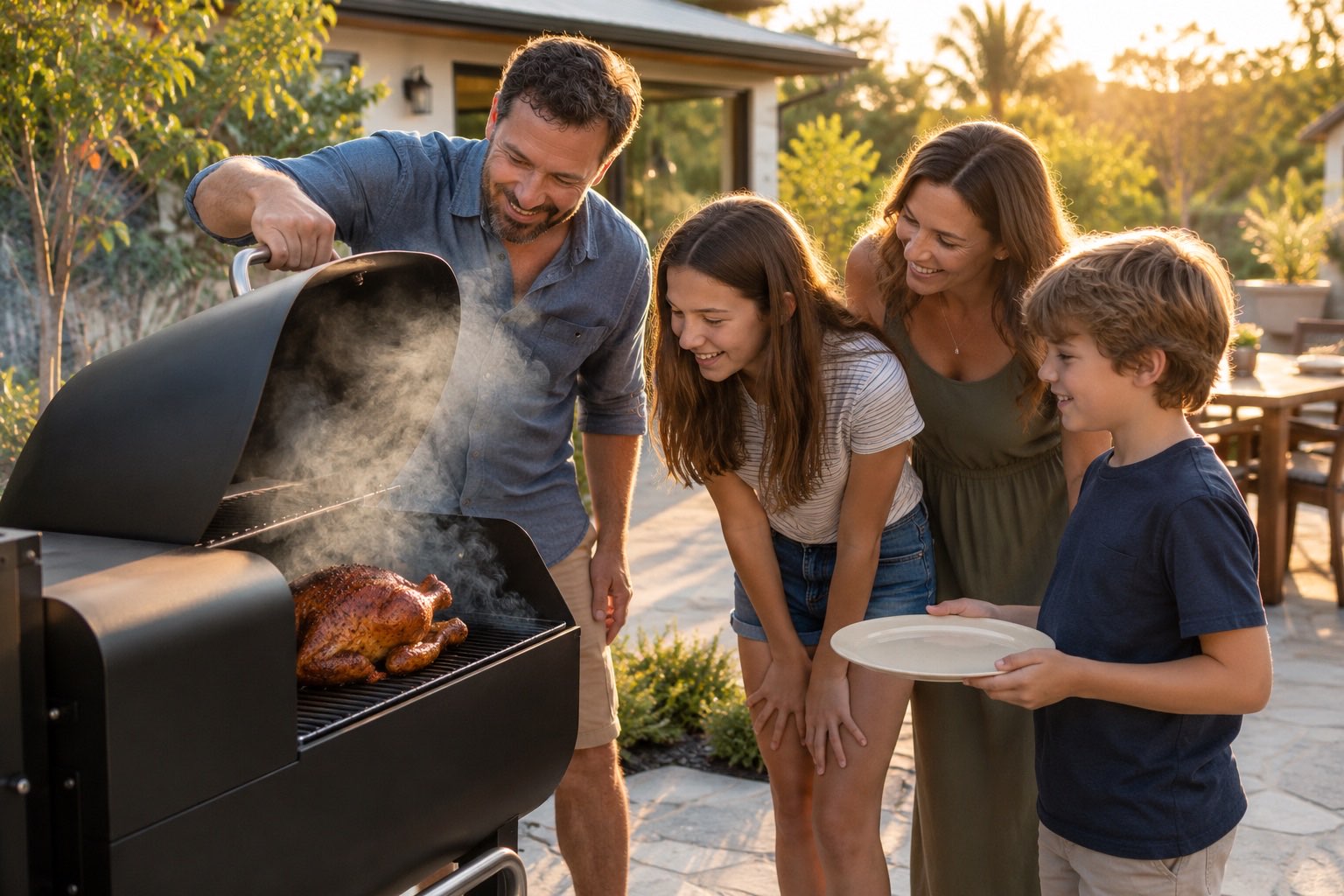
A pellet grill is a wood-fired convection oven: an auger feeds hardwood pellets to a small fire pot, a fan moves the heat and smoke around the food, and a controller holds the temperature you set. A gas grill cooks over open burners and gets hot fast, which makes it better for quick searing but gives you no wood smoke on its own. Pick a pellet grill if you smoke and roast low and slow, gas if you mostly grill burgers and steaks on weeknights.
Affiliate disclosureAs an Amazon Associate we earn from qualifying purchases made through links on this page. Commissions never change our ratings.
How each grill makes its heat
On a pellet grill you set a number and the controller does the rest. It reads a sensor in the cook chamber and feeds more pellets when the heat drops and fewer when it climbs, as Pit Boss explains for its PID controllers. A heat baffle sits over the fire, so most cooking is indirect: the food sits in hot, smoky air rather than over a flame. That is why Traeger’s Pro Series manual promotes “no flare-ups” and channels drippings into an outside grease bucket.
A gas grill works the other way around. You turn the knobs, the burners heat the grates directly, and you manage the heat yourself by moving food between hot and cooler zones. Fewer moving parts, no electricity for most models, but also no automatic temperature hold.
Temperature: smoking range vs searing heat
Pellet grills are strongest in the low range. Pit Boss’s PB700FB1 manual splits its 180 to 500°F dial into three zones: 180 to 257°F for smoking and slow roasting, 275 to 356°F for baking and roasting, 401 to 500°F for searing and grilling. Traeger’s Super Smoke button, which adds extra smoke, only works between 165 and 225°F on the Ironwood.
The top end is where gas usually wins on a standard pellet grill. Most pellet grills stop around 500°F of hot air (550°F on the Green Mountain Trek), which is plenty for roasting but gives a steak less direct heat than an open burner. Some pellet grills close that gap: on Pit Boss grills with a Flame Broiler you slide a plate open and cook over the fire pot itself, and Pit Boss quotes up to 1,000°F of direct flame on its Navigator 850. The manual’s rule is just as important: never leave the grill unattended with the broiler open.
| Pellet grill | Gas grill | |
|---|---|---|
| Heat | indirect convection from a fire pot, temperature held by a controller | direct burners, adjusted by hand |
| Typical range | 165–500°F (up to 550°F on some models) | hot and fast; low smoking takes extra gear |
| Flavor | hardwood smoke from the fuel itself | no wood smoke unless you add chips |
| Fuel | food-grade hardwood pellets, kept dry | propane cylinder or natural gas line |
| Power | 120 V outlet for auger, fan and igniter | usually none beyond the push igniter |
| Cleaning | grease system, fire pot ash, chimney | grates, burners, venturi tubes, hoses |
Fuel, power and day-to-day running
Pellets are the fuel and the flavor, so they need care. Traeger’s manual forbids heating-stove pellets, which may contain additives, and asks you to store cooking pellets somewhere dry; water makes them swell and jam the auger. Traeger’s storage page goes further and calls poor pellet quality, usually from bad storage, the number one cause of temperature problems. A bag in a damp garage is a bad start.
Consumption depends on the temperature, wind and lid openings. As a ceiling, Pit Boss prints a fuel input rating of 2.48 lb (1.12 kg) per hour for the PB700FB1; low-and-slow cooks burn less. A pellet grill also needs a grounded outlet: Pit Boss warns that its igniter draws 200 to 700 watts at start-up, which can trip a sensitive GFCI. A gas grill needs neither, only a full tank.
Cleaning and safety are different jobs
The pellet grill routine is about grease and ash. Traeger asks you to inspect the grease drip tray, drain and bucket before every cook, to vacuum the fire pot every 20 hours of use, and to scrape creosote from the chimney now and then; grease fires on pellet grills come from skipped cleaning. Keep at least 18 inches between the grill and anything that burns, per the Pro Series manual.
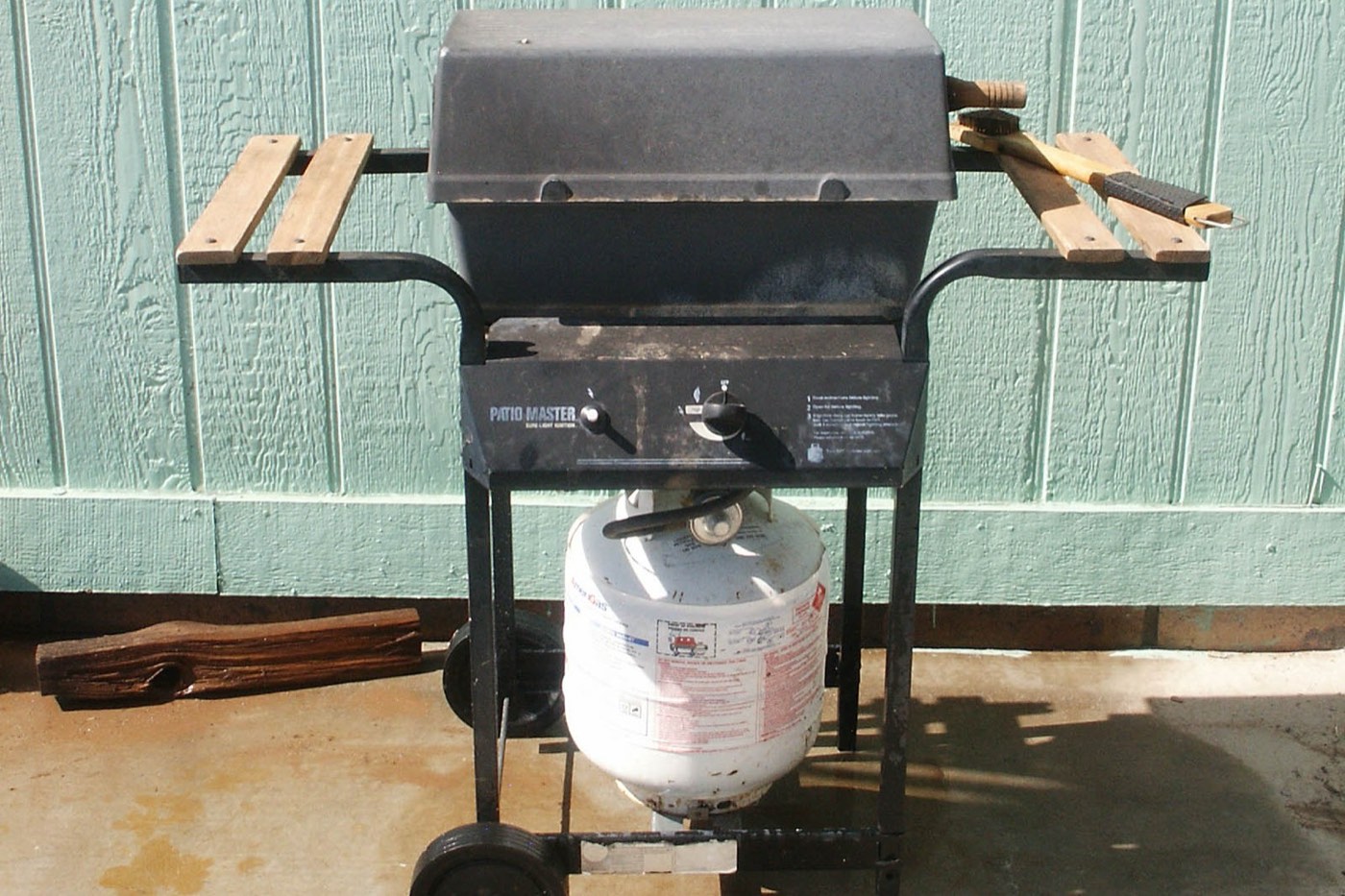
Gas has its own checklist. The U.S. Consumer Product Safety Commission asks owners to check the venturi tubes for blockages at least once a year, to inspect hoses, to brush soapy water on the connections after every cylinder change (bubbles mean a leak) and to use the grill at least 10 feet from the house. A spare propane cylinder never goes under or next to the grill. Neither routine is hard, but they are not the same, so pick the one you will actually keep.
Which pellet grill makes sense if you are switching from gas
- You want wood smoke and roasting, and have a gas grill for steaks: Traeger Pro 22 (572 sq in, 18 lb hopper per the listing), our top-rated grill at 9.4/10.
- You want one grill that also sears: Pit Boss 850 Navigator or Pit Boss 500 FB2, both Pit Boss grills with the sliding Flame Broiler for direct-flame cooking.
- You cook for a crowd: Traeger Ironwood 885 (885 sq in, WiFi) or Traeger Woodridge (860 sq in).
The full order is in our pellet grill ranking. If the deciding question is size, our cooking area guide shows how to compare grates fairly.
Our rated picks
The three best-rated models of our best pellet grills ranking, from buyer reviews and the listed specs.


Product images: Amazon listings
Frequently asked questions
Is a pellet grill better than a gas grill?
For smoking, roasting and hands-off cooking, yes: the controller holds the temperature and the pellets add wood smoke. For fast, very hot searing a gas grill is usually better, unless the pellet grill has a direct-flame option such as a Flame Broiler.
Can a pellet grill sear like a gas grill?
A standard pellet grill tops out around 500°F of indirect heat, which gives a lighter crust than an open burner. Grills with a direct-flame plate get much hotter over the fire pot; Pit Boss quotes up to 1,000°F on its Navigator 850.
Does a pellet grill need electricity?
Yes. The auger, fan, controller and igniter run on a 120 V outlet, and Pit Boss notes the igniter alone draws 200 to 700 watts at start-up. Most gas grills need no power at all.
Pellet grill or propane grill for a beginner?
A pellet grill is easier for low-and-slow cooking because you set a temperature and walk away. A propane grill is simpler to run and maintain if you mostly cook quick weeknight meals.
Sources
- Pit Boss — PB700FB1 wood pellet grill owner’s manual (PDF) (consulted Nov 2026)
- Traeger — Pro Series 22/34 owner’s manual (PDF) (consulted Nov 2026)
- Pit Boss — Temperature Control: What the Flame Broiler and PID Controller Actually Do (consulted Nov 2026)
- Traeger — Ironwood owner’s manual (PDF) (consulted Nov 2026)
- Traeger — How to Store Wood Pellets (consulted Nov 2026)
- U.S. Consumer Product Safety Commission — Gas Grill fact sheet (PDF) (consulted Nov 2026)
Products mentioned
- Traeger Pro 22 (exact listing) · Rating and specs
- Pit Boss 850 Navigator (exact listing) · Rating and specs
- Pit Boss 500 FB2 (exact listing) · Rating and specs
- Traeger Ironwood 885 (exact listing) · Rating and specs
- Traeger Woodridge (exact listing) · Rating and specs