Pellet Grill Temperature Control: PID, Probes, Swings
How pellet grill temperature control works: the chamber sensor, PID vs standard controllers, P settings, normal swings and what really causes them.

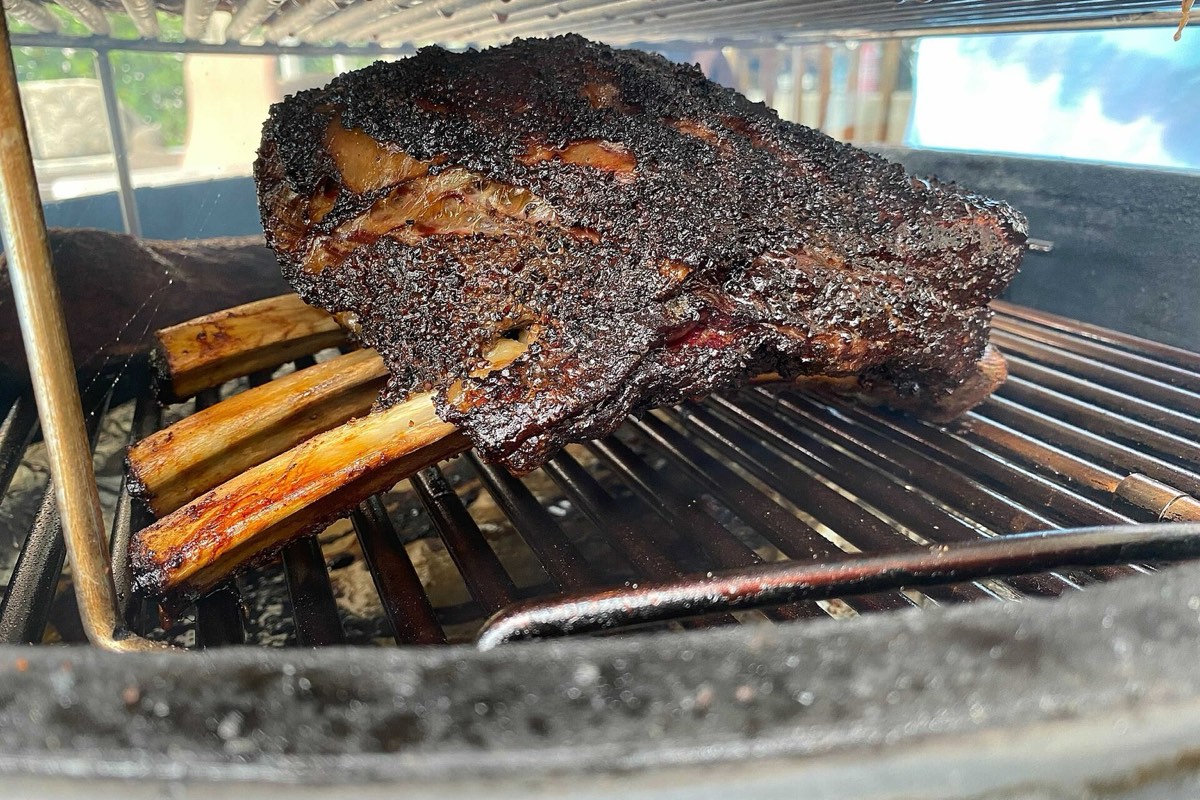
A pellet grill controls its temperature by reading a sensor inside the cook chamber and changing how fast the auger feeds pellets to the fire pot. A PID controller makes those corrections continuously and reacts faster to wind and cold, a standard controller feeds on a fixed rhythm. Either way, swings of about 25°F around the set point are normal, and wet pellets, a dirty fire pot or an open lid cause more trouble than the controller itself.
Affiliate disclosureAs an Amazon Associate we earn from qualifying purchases made through links on this page. Commissions never change our ratings.
How the grill holds a temperature
Three parts do the work: a temperature sensor on the inside wall of the barrel, the auger that pushes pellets from the hopper into the fire pot, and a fan that feeds air to the fire and moves the heat around. Pit Boss’s PB700FB1 manual describes the grill probe as a small stainless steel rod on the left wall that reads the chamber temperature so the controller can adjust to the target. More pellets mean more heat, fewer mean less.
That sensor reads the air in one spot, not the grate everywhere. The middle of the grate, the edges and the upper rack can differ, which is one reason to cook to a meat probe rather than to the number on the display.
PID or standard controller: what changes
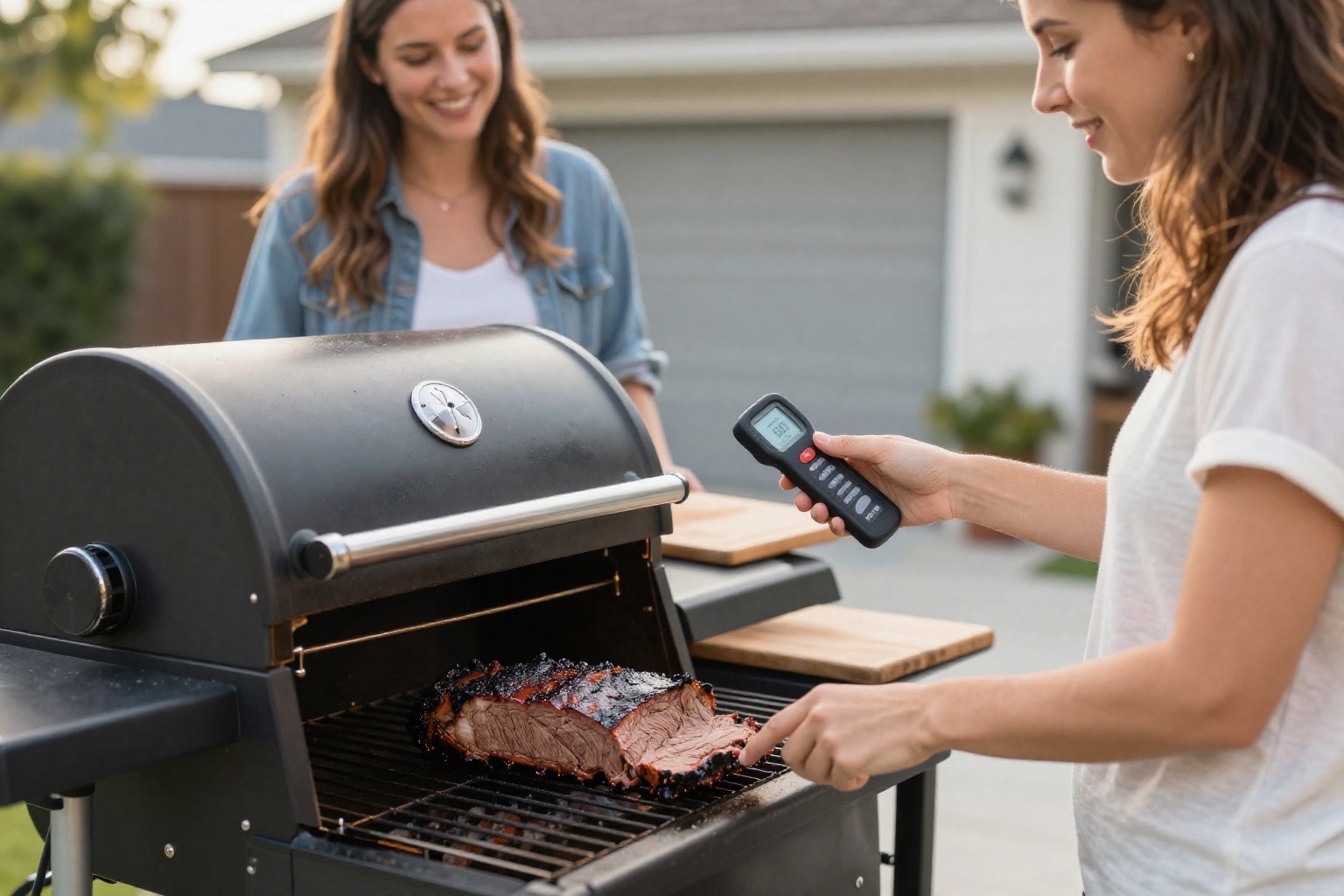
Pit Boss explains the difference plainly. A standard controller times the pellet feed to reach the set temperature. A PID controller, short for proportional, integral, derivative, adds a calculation that anticipates the change and adjusts the feed more precisely, including for wind and air temperature. Pit Boss also notes that some cooks prefer the bigger swings of a standard controller because they believe it makes more smoke, and calls the choice a matter of preference.
Some standard controllers let you tune the feed. On the Pit Boss PB700FB1 the recessed P button sets the pellet feed cycle on the SMOKE setting from P0 to P7, with P4 as the default, and Pit Boss’s troubleshooting table says to raise the P setting if the grill runs too hot on SMOKE. The same table blames unstable temperatures on poor airflow through the burn pot: ash buildup, a dirty fan or a blocked air intake.
| Grill | Range or mode | What the manual or maker says |
|---|---|---|
| Pit Boss PB700FB1 | 180–500°F | P0–P7 feed settings on SMOKE, default P4 |
| Pit Boss Navigator 850 | 180–500°F, set in 5° steps | PID controller, direct flame up to 1,000°F |
| Traeger Woodridge Pro | Super Smoke at 225°F or lower | ±25°F swings normal on a good-weather day |
| Traeger Ironwood | Super Smoke 165–225°F, Keep Warm 165°F | swings normal; wind, cold and maintenance cause larger ones |
| Green Mountain Trek Prime 2.0 | 150–550°F | variable-speed fan and auger on 12 V DC |
Why the temperature swings, and what to fix first
Traeger lists the usual suspects in its Pro Series manual: wind, air temperature, the wrong start-up procedure, improper use and lack of maintenance. In practice, check them in this order:
- Pellets: Traeger calls poor pellet quality, usually from storage, the number one cause of temperature issues. Damp pellets crumble, feed unevenly and can let the fire go out.
- Ash in the fire pot: Traeger asks for the ash to be cleared every 20 hours of cooking; Pit Boss cleans the burn pot every 2 to 3 sessions. Too much ash chokes the fire.
- The lid: every opening dumps heat and makes the controller overshoot when it catches up.
- Cold and wind: Traeger suggests an insulation blanket below freezing; a windbreak helps too.
- Start-up: let the grill preheat with the lid closed; Traeger asks for 10 minutes after ignition before the food goes on.
Meat probes are the number that matters
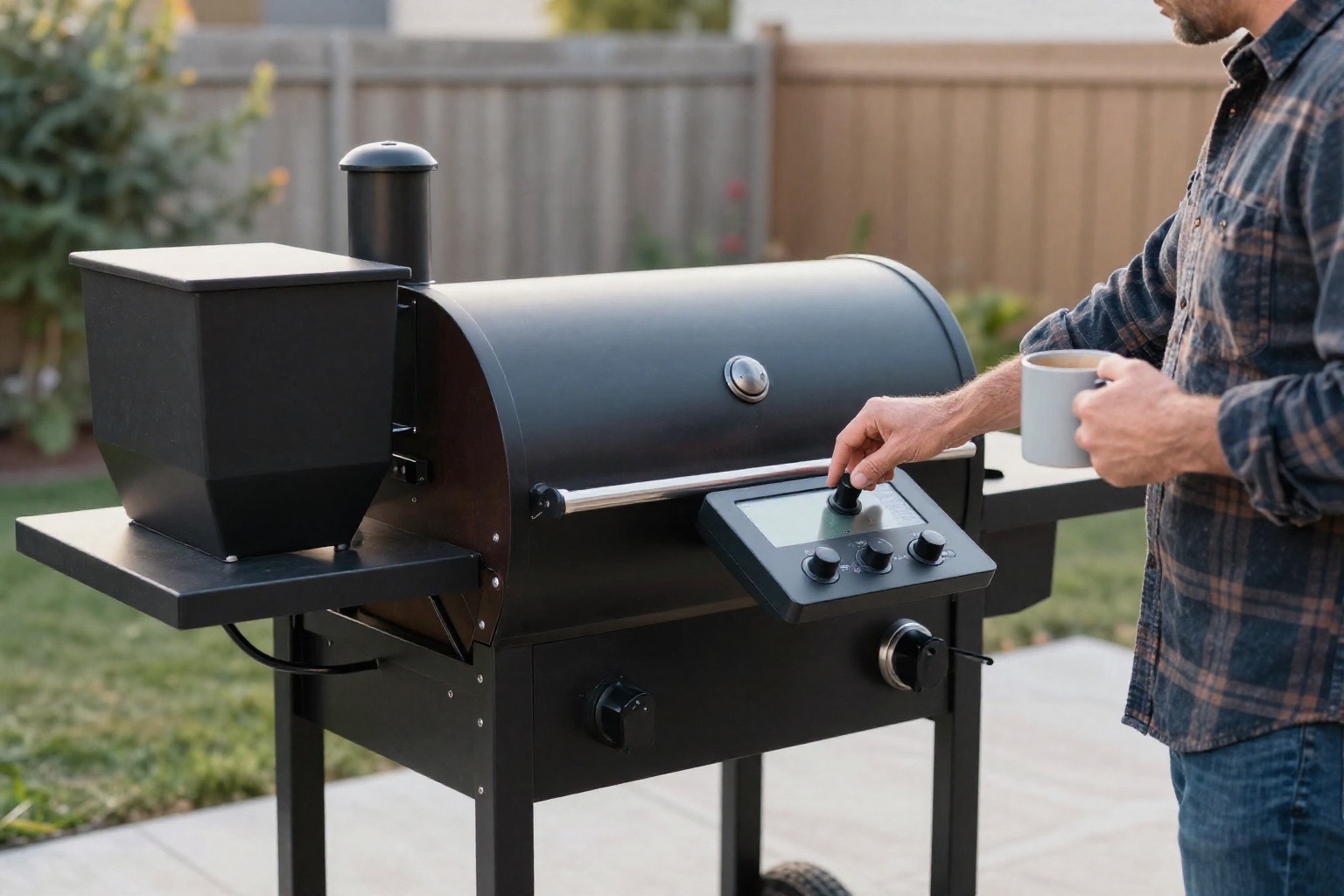
The display shows the chamber; your dinner is done when the inside of the meat is. Put the probe in the thickest part, at least 2 inches deep and away from bone, as Traeger’s manuals ask. Many controllers can raise an alert at a target probe temperature, and WiFi models push it to your phone. If your grill has one probe and you cook two things, a wireless thermometer is a cheap fix. Our WiFi guide covers app alerts.
Which grills from our ranking hold temperature best
These picks rest on the controller each listing and manual describe, and on what buyers report:
- PID control and WiFi: Pit Boss 850 Navigator with Pit Boss’s PID controller and 5° steps.
- Connected Traeger controllers: Traeger Woodridge and Traeger Ironwood 885, both WiFi per the listing.
- Simple and steady: Traeger Pro 22, our top-rated grill at 9.4/10.
- Budget PID: Z Grills 600D2, PID 3.0, a Z Grills 600D2 whose listing names a PID 3.0 controller.
Compare more in our pellet grill ranking and WiFi pellet grill ranking.
Our rated picks
The three best-rated models of our best pellet grills ranking, from buyer reviews and the listed specs.


Product images: Amazon listings
Frequently asked questions
Which pellet grills have the most reliable temperature control?
Grills with a PID controller hold temperature most steadily because they adjust the feed continuously. Pellet quality and a clean fire pot matter just as much as the controller.
How much temperature swing is normal on a pellet grill?
Traeger calls swings of about 25°F either way normal on a good-weather day for the Woodridge Pro. Larger swings usually come from wind, cold, damp pellets or ash buildup.
What does the P setting do on a Pit Boss?
It fine-tunes the pellet feed cycle on the SMOKE setting, from P0 to P7 with P4 as the default. Pit Boss says to raise the P setting if the grill runs too hot on SMOKE.
Why does my pellet grill fire go out on the smoke setting?
Traeger’s manual names old or damp pellets and too much ash in the fire pot. Let the grill cool, clear the fire pot and restart; never add pellets by hand to a hot fire pot.
Sources
- Pit Boss — PB700FB1 wood pellet grill owner’s manual (PDF) (consulted Nov 2026)
- Pit Boss — PID Controller Basics: How it Works on a Pellet Grill (consulted Nov 2026)
- Pit Boss — Temperature Control: What the Flame Broiler and PID Controller Actually Do (consulted Nov 2026)
- Traeger — Pro Series 22/34 owner’s manual (PDF) (consulted Nov 2026)
- Traeger (copy hosted by The Home Depot) — Woodridge Pro owner’s manual (PDF) (consulted Nov 2026)
- Traeger — Ironwood owner’s manual (PDF) (consulted Nov 2026)
- Traeger — How to Store Wood Pellets (consulted Nov 2026)
Products mentioned
- Pit Boss 850 Navigator (exact listing) · Rating and specs
- Traeger Woodridge (exact listing) · Rating and specs
- Traeger Ironwood 885 (exact listing) · Rating and specs
- Traeger Pro 22 (exact listing) · Rating and specs
- Z Grills 600D2, PID 3.0 (exact listing) · Rating and specs