How to Clean a Pellet Grill: Steps and Schedule
How to clean a pellet grill: the grease system, fire pot ash, chimney, grates and hopper, with the cleaning schedule Traeger and Pit Boss recommend.

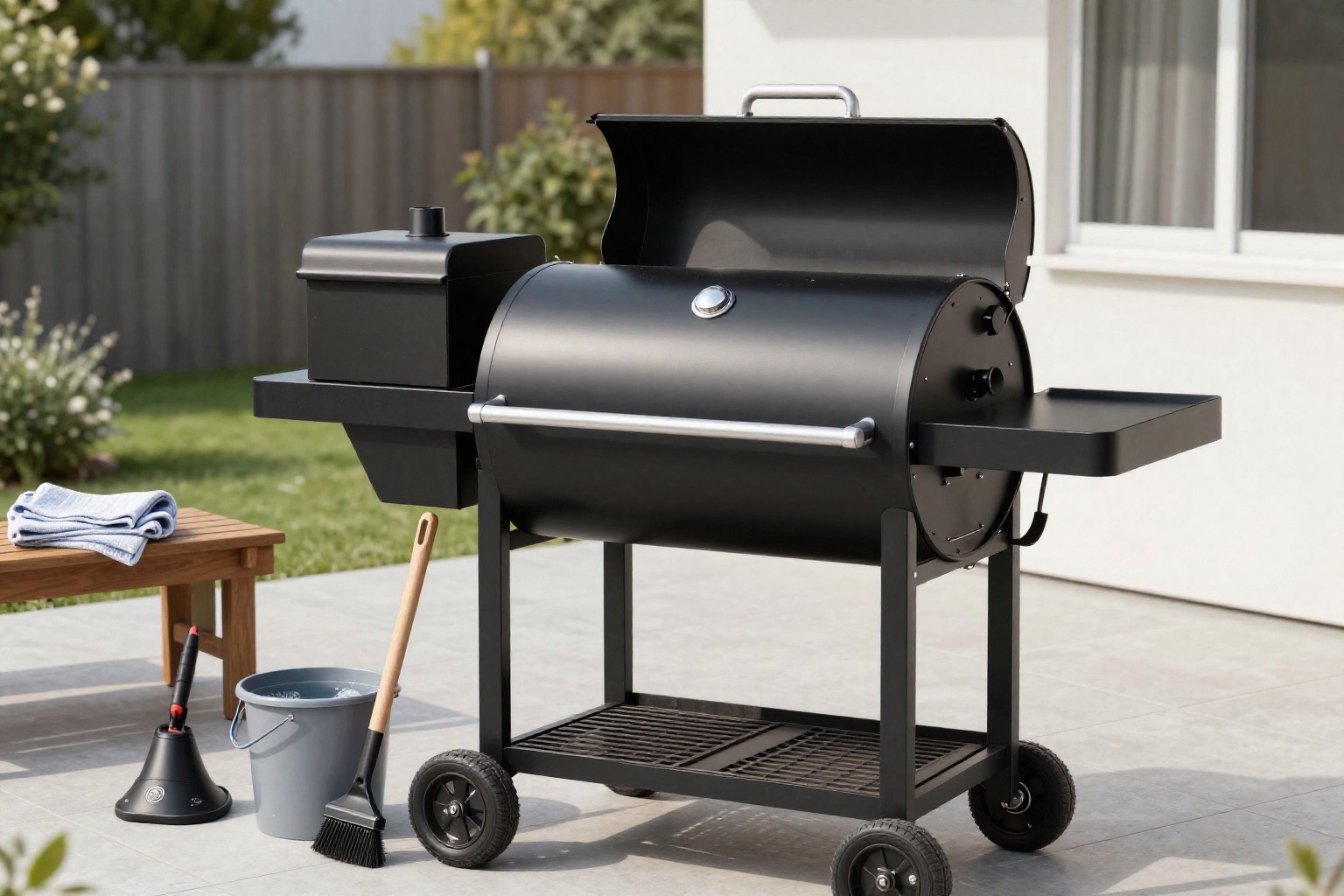
To clean a pellet grill, let it cool completely, unplug it, then scrape the grates, clear the grease tray, drain and bucket, and vacuum the ash out of the fire pot and barrel. Traeger recommends a deep clean every 2 to 3 cooks or 20 to 24 hours of cooking, with the grease system checked before every cook. Clean grease is the single most important job, because grease buildup is what causes pellet grill fires.
Affiliate disclosureAs an Amazon Associate we earn from qualifying purchases made through links on this page. Commissions never change our ratings.
A pellet grill cleaning schedule
Traeger and Pit Boss publish similar schedules. Adjust them to what you cook: fatty food like bacon, pork belly or brisket means more frequent grease cleaning, sometimes after every cook, as Traeger’s manual says.
| Part | Traeger | Pit Boss (PB700FB1) |
|---|---|---|
| Grates | scrape after each use | after each session |
| Grease tray, drain, bucket | inspect before every cook | grease bucket after each session |
| Fire pot / burn pot ash | every 20 hours of use | every 2–3 sessions |
| Inside of the barrel | every 2–3 cooks or 20–24 hours | bottom every 5–6 sessions |
| Grease chute or downdraft | every 6 months | – |
| Outside | every 3 months (manual: every 90 days) | shelf after each session |
| Hopper and auger | empty before rain or storage | run the auger empty when a bag runs out |
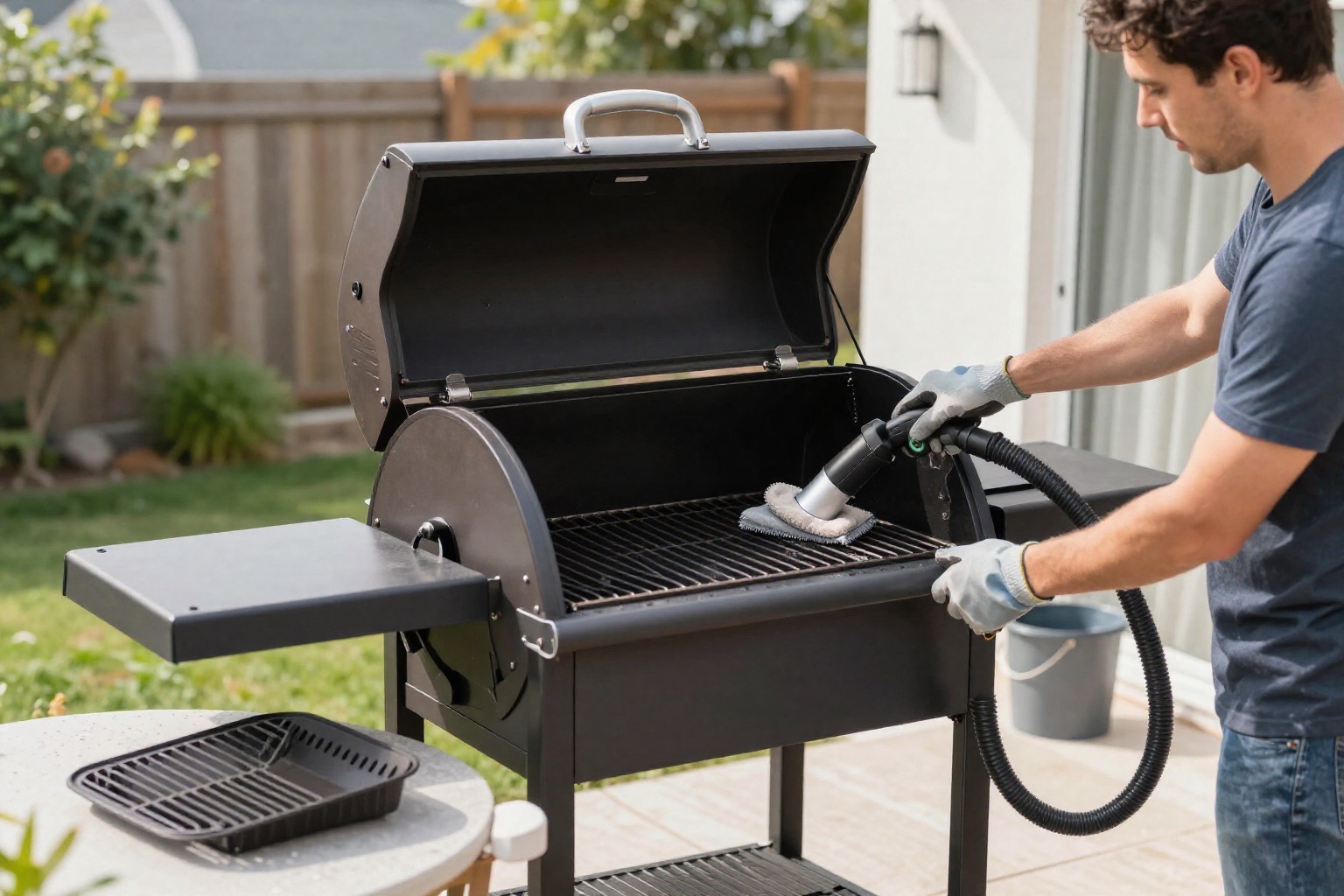
Step by step: the deep clean
- Run the shutdown cycle, let the grill cool completely, switch it off and unplug it. Every manual insists on a cold grill.
- Remove the grates, the drip tray and the heat baffle. Scrape the grates; Traeger recommends a nylon brush or wooden scraper rather than wire on its coated grates.
- Scrape the grease off the drip tray and out of the V-shaped drain and drain tube with a stiff, non-metal tool, pushing it down into the bucket. Replace the liners.
- Vacuum the ash out of the fire pot and the bottom of the barrel with a dedicated shop vacuum. Traeger stresses doing this only when the grill and ash are cold.
- Wipe the inside with paper towels or a mild cleaner such as diluted dish soap and vinegar; do not spray water into the fire pot.
- Put the baffle, tray and grates back so they sit on their brackets. A misplaced baffle can expose the grease to the flame, Traeger warns.
Grease, creosote and the chimney
Traeger’s manual is clear that grease fires come from not cleaning the grease system often enough. On a classic pellet grill grease runs from the drip tray into a trough, through a tube and into a bucket; each of those can clog. Newer designs like Traeger’s Woodridge collect grease and ash in a single keg with a disposable liner, which is quicker to empty, and the grill must stand level so the grease reaches it.
Slow, low fires also leave creosote, a tar-like deposit, in the chimney or exhaust. Traeger asks owners to scrape it out periodically with a non-metal tool such as a wooden paint stick, and never to spray water inside. Green Mountain Grills adds that dark, sooty smoke may mean creosote has built up inside the grill.
Ash, pellets and storage
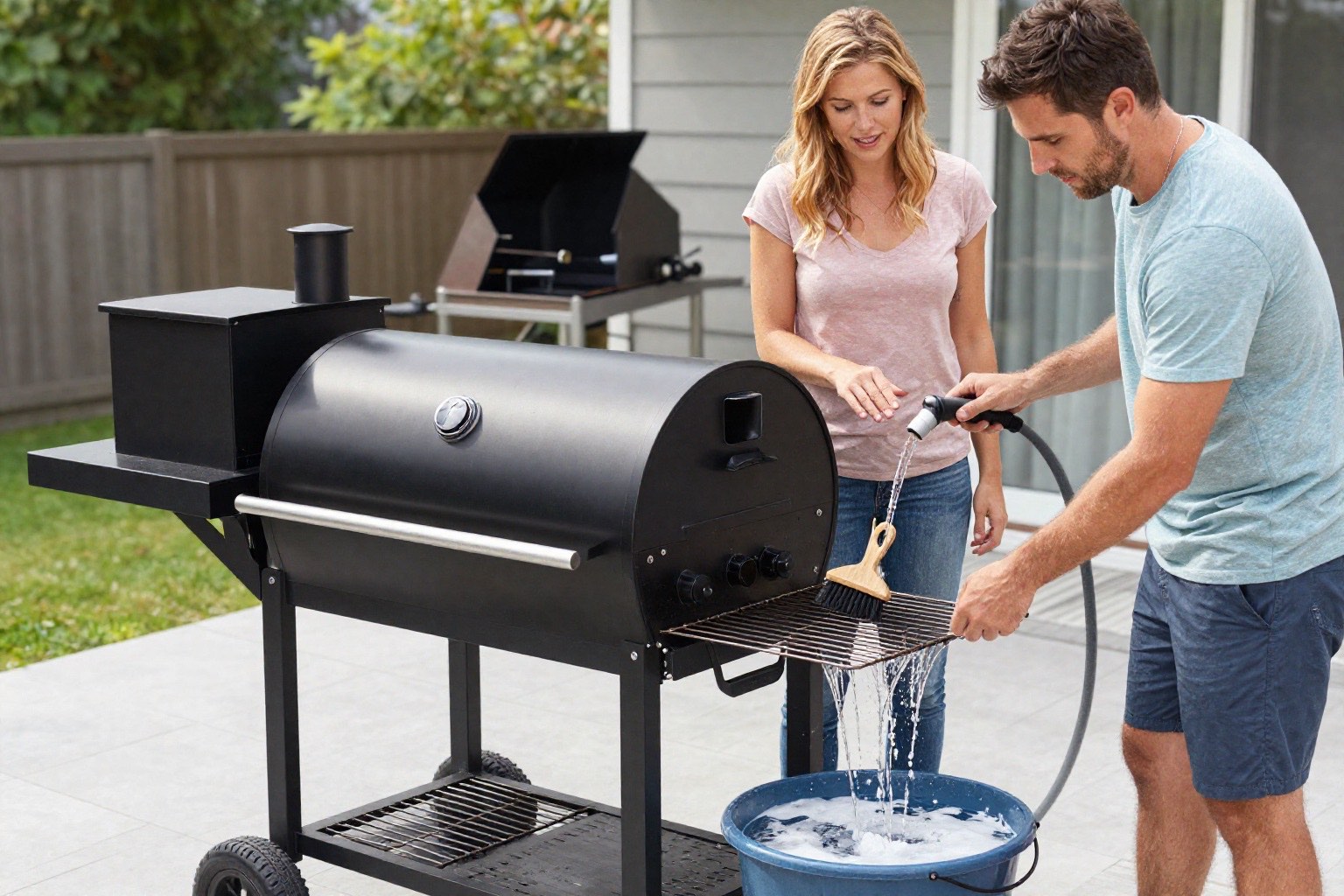
Ash handling is a safety step. Traeger and Pit Boss both ask for cold ashes to go into a metal container with a tight lid, kept on a non-combustible surface away from anything that burns until disposal. Too much ash in the fire pot also makes ignition fail and the fire go out.
Old pellets are the other maintenance item. Pellets that sat in the hopper through damp weather can crumble and jam the auger, so empty the hopper before rain or storage and look inside for moisture or mold, as Traeger suggests. Store the grill covered and dry for the winter. Our hopper and storage guide covers pellet care in detail.
Grills from our ranking that are easier to keep clean
- One keg for grease and ash: Traeger Woodridge (8/10) or Traeger Woodridge Pro with Traeger’s EZ-Clean keg described above.
- Classic bucket and hopper clean-out door: Traeger Pro 22, our top-rated grill.
- Large-volume cooking: Pit Boss 850 Navigator, with the Pit Boss schedule in the table above.
- Liners and covers: see our accessory reviews and our accessories guide.
Our rated picks
The three best-rated models of our best pellet grills ranking, from buyer reviews and the listed specs.


Product images: Amazon listings
Frequently asked questions
How often should you clean a pellet grill?
Scrape the grates after each cook and check the grease system every time. Traeger recommends a deep clean every 2 to 3 cooks or 20 to 24 hours of cooking, and the fire pot ash every 20 hours.
How do you clean the fire pot of a pellet grill?
Only when the grill and ash are completely cold: remove the grates, drip tray and baffle, then vacuum the ash out of the fire pot with a dedicated shop vacuum.
Can I pressure wash or hose down my pellet grill?
Do not spray water inside. Traeger warns that water in the fire pot jams the auger and that creosote should be scraped, not washed; wipe the inside with paper towels and a mild cleaner instead.
What causes a grease fire in a pellet grill?
Grease left to build up in the drip tray, drain or barrel, or a heat baffle that is not seated properly. Regular grease cleaning and liners are the prevention.
Sources
- Traeger — Pro Series 22/34 owner’s manual (PDF) (consulted Nov 2026)
- Traeger — How to Clean a Traeger Grill (consulted Nov 2026)
- Traeger — How to Clean a Traeger Grease Trap (consulted Nov 2026)
- Pit Boss — PB700FB1 wood pellet grill owner’s manual (PDF) (consulted Nov 2026)
- Traeger (copy hosted by The Home Depot) — Woodridge Pro owner’s manual (PDF) (consulted Nov 2026)
- Green Mountain Grills — Trek Prime 2.0 owner’s manual (PDF) (consulted Nov 2026)
Products mentioned
- Traeger Woodridge (exact listing) · Rating and specs
- Traeger Woodridge Pro (exact listing) · Rating and specs
- Traeger Pro 22 (exact listing) · Rating and specs
- Pit Boss 850 Navigator (exact listing) · Rating and specs